Meta Ads vs Google Ads: Which Is Right for Your Business?
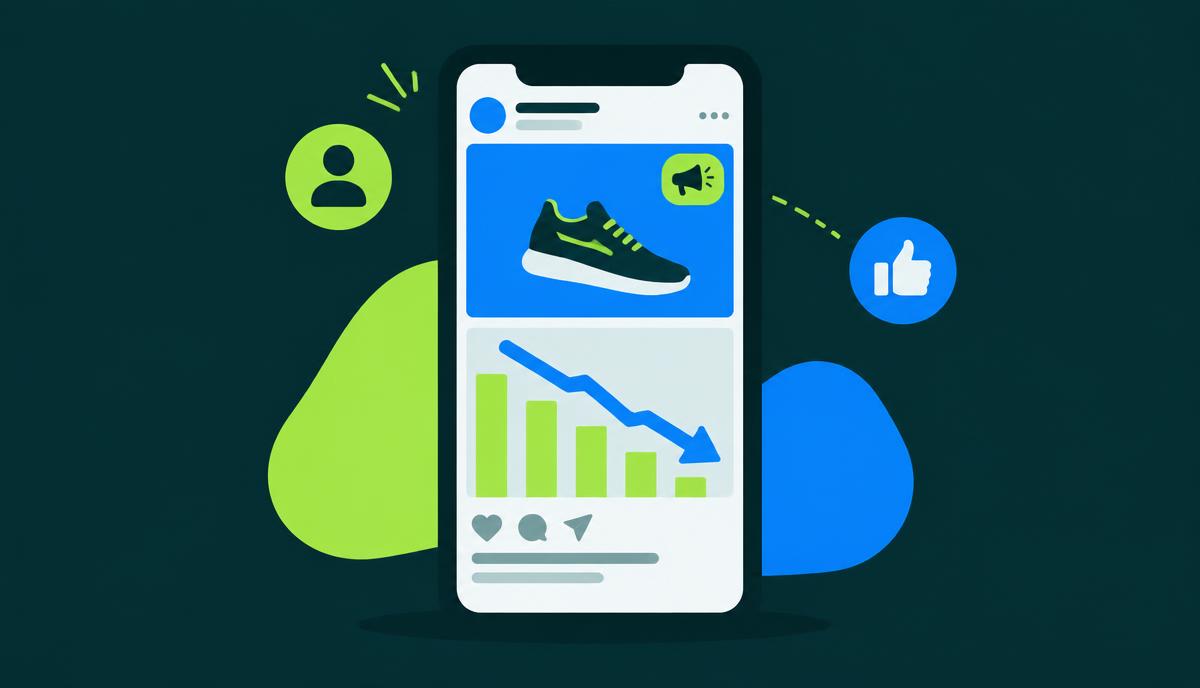
Meta creates demand. Google captures it. Here is how the two platforms differ, when each makes sense, and how to decide where your advertising budget should go first.
 Ivi SofroniouPublished Updated 11 min read
"Should I run Meta Ads or Google Ads?"
It is one of the questions I hear most from businesses investing in paid acquisition.
The problem is that Meta Ads and Google Ads are often compared as if they do the same job.
They don't.
If people are already actively searching for what you sell, Google Ads can be incredibly effective at capturing that existing demand. If people are not searching for your product yet, or your growth depends on introducing your brand to new audiences, Meta Ads can be much stronger at creating and expanding that demand.
For many ecommerce and growth-focused brands, the best answer in the Meta Ads vs Google Ads debate is not Meta or Google.
It is understanding what role each platform should play in your acquisition strategy.
The core difference: demand creation vs demand capture
The simplest way to understand Meta Ads vs Google Ads is through customer intent.
Google Ads typically reaches someone after they have expressed intent. They might search:
- "running shoes for women"
- "best accountant near me"
- "luxury engagement rings"
- "skincare for dry skin"
The user has already identified a need and is actively looking for a solution.
Meta Ads work differently. Someone may be scrolling Instagram or Facebook with no intention of buying anything. Your job is to interrupt that behaviour with an ad relevant enough to make them stop, pay attention and consider your product.
This is why I often describe the platforms like this:
That distinction should influence everything from budget allocation to creative strategy and how you measure performance.
Meta Ads vs Google Ads at a glance
| Factor | Meta Ads | Google Ads |
|---|---|---|
| User intent | Mostly passive. Users are browsing content. | Often active. Users may already be searching for a solution. |
| Primary strength | Creating and expanding demand. | Capturing existing demand. |
| Main performance lever | Creative, offer, positioning and audience signals. | Search intent, keywords, feed quality, bidding and landing pages. |
| Creative requirements | High. A consistent creative testing pipeline is usually important. | Varies by campaign type. Search relies less on visual creative, while Shopping, Performance Max and YouTube require stronger assets. |
| Scalability | Large audience potential when creative and economics support scaling. | Can be constrained by available search demand in some categories. |
| Best suited to | Visual products, ecommerce, new categories, discovery-led products and brands that can produce strong creative. | Established demand, high-intent products and services, local services and Shopping-led ecommerce. |
| Cost | Often provides relatively inexpensive reach, but performance depends heavily on creative and conversion rate. | CPC can be higher in competitive categories, but clicks may carry stronger purchase intent. |
Do not choose a platform based on CPC alone.
A £1 click that never converts is more expensive than a £5 click from someone ready to buy.
The metric that matters is what it costs you to acquire profitable customers.
When Meta Ads makes more sense
Meta Ads is generally better when your challenge is not simply capturing demand but generating it.
Meta may deserve a larger share of your budget when:
- Your product is new or relatively unknown.
- People are unlikely to search specifically for what you sell.
- Your product is visual or benefits from demonstration.
- Strong UGC, video, static or founder-led creative can communicate the value quickly.
- You want to introduce the brand to a large new audience.
- You have enough creative resources to test different hooks, angles and formats.
- Your category has limited search volume.
- You want to build audiences that can later convert through Meta, Google, email or other channels.
For ecommerce businesses in particular, creative is often one of the biggest performance levers on Meta.
You are not simply targeting an audience. You are testing different reasons why somebody should stop scrolling and care about the product. That could be:
- a problem-solution angle
- product demonstration
- testimonial
- comparison
- founder story
- offer
- social proof
- before and after
- education
- lifestyle positioning
This is why two brands selling very similar products can have completely different results on Meta. The ad itself matters. If you need a starting point, here are 50 scroll-stopping hooks for ads you can adapt.
When Google Ads makes more sense
Google Ads is generally better when demand already exists.
Google may deserve a larger initial share of your budget when:
- People are already searching for your product or service.
- Search intent indicates someone is close to making a decision.
- You operate in an urgent or needs-based category.
- You provide services such as legal, repairs, healthcare, local services or professional services.
- Your ecommerce catalogue is suitable for Google Shopping.
- Customers compare products, prices or suppliers before buying.
- Your brand already has meaningful search demand.
- You want to capture people who discovered you through another marketing channel.
Imagine someone has a leaking pipe. They are unlikely to wait for a plumber ad to appear on Instagram. They search for a plumber. That is where Google Search becomes extremely powerful.
The same logic can apply to ecommerce. Someone searching for a very specific product can have significantly stronger intent than someone seeing that product for the first time while scrolling Instagram.
But strong intent does not automatically mean profitable advertising. Your offer, landing page, pricing, conversion rate, competition and economics still matter.
Which is better for ecommerce: Meta Ads or Google Ads?
For ecommerce, I would not think about this as Meta versus Google. I would think about the role each platform plays.
Where Meta is strongest
- introducing products
- reaching new customers
- communicating product benefits visually
- testing creative angles
- creating demand
- scaling beyond people already searching for the category
Where Google is strongest
- Shopping campaigns
- capturing product searches
- capturing category demand
- branded searches
- reaching customers who are further along in the buying journey
A potential customer might first discover your product from a Meta ad. They do not purchase immediately. Two days later, they search your brand name on Google, click a search or Shopping ad, and buy.
If you only look at the final click, Google can appear to have generated that customer. But Meta may have created the demand in the first place.
That is why channel attribution needs context.
Which is better for service businesses?
For service businesses, Google is often the logical platform to test first, particularly when search intent is strong. Examples include:
- accountants
- lawyers
- plumbers
- dentists
- clinics
- repair services
- property services
- consultants
Someone searching for a solution is already raising their hand.
However, Meta can still play an important role. For services with longer consideration periods, Meta can build awareness, demonstrate expertise, show testimonials and create familiarity before the prospect is ready to enquire.
For higher-ticket services, I often care less about asking which platform wins the final conversion and more about understanding how the platforms work together across the customer journey.
What if you have a small advertising budget?
If your budget is limited, splitting it equally across Meta and Google is not automatically the right approach. Fragmenting a small budget can make it harder for either platform to gather enough data.
Instead, identify where your strongest opportunity currently sits.
- If there is strong, measurable search demand: start by capturing it through Google Search or Shopping.
- If there is little existing search demand: Meta may be the better platform to lead with.
- If you have a proven ecommerce offer and strong creative: Meta may give you more room to generate incremental demand.
- If your service solves an immediate problem: Google Search may offer stronger intent.
The objective should not be "be active on every platform." The objective should be to put enough budget behind the platform most likely to generate useful learning and profitable acquisition.
Which platform scales better?
This depends heavily on the business.
Google Search is ultimately constrained by how many relevant searches happen. If 10,000 people search for a particular service every month, you cannot force another 100,000 high-intent searches to appear simply by increasing your budget.
Meta has a much larger discovery component. That can give businesses greater room to expand reach and generate additional demand. But Meta's ability to scale depends heavily on:
- creative depth
- offer strength
- audience size
- conversion rate
- product-market fit
- margins
- customer lifetime value
Increasing spend does not create scalability if the underlying economics are weak. If you want to check yours, the LTV calculator shows what a customer is worth over time.
How creative requirements differ
This is one of the biggest differences businesses underestimate.
On Meta, creative is not just a design task. It is part of your targeting and acquisition strategy. Different hooks and angles help Meta understand who responds to your offer while also giving consumers different reasons to buy. That means Meta advertisers often need a steady testing pipeline.
Google Search has a different creative requirement. You are primarily competing around intent, relevance, copy, bids and landing page experience. Shopping and Performance Max add more visual components, but the strategic starting point is still different from interruptive social advertising.
This matters when deciding where to invest. If a business cannot currently produce new advertising creative consistently, that operational constraint should be considered before aggressively scaling Meta.
Should you run Meta Ads and Google Ads together?
For many established businesses, yes. Use both when you have proven demand to capture and room to grow beyond it.
Meta can introduce someone to your brand. Google can capture them when they later search. Google can show you where active demand already exists. Meta can help you grow beyond that demand.
The mistake is expecting both platforms to produce identical attribution numbers. Customer journeys are rarely that clean.
How I decide where a client should invest first
When I assess a brand, I do not start with "Which platform is better?" I start with the business.
1. Existing demand
Are people actively searching for the product, category or problem?
2. Product and offer
Is the product immediately understandable? Does it need education or demonstration?
3. Creative potential
Can we produce enough quality creative to test multiple hooks and angles on Meta?
4. Search volume
Is there enough relevant Google demand to support meaningful spend?
5. Margins and break-even point
What can the business realistically afford to pay to acquire a customer?
6. Conversion rate
Sending more traffic to a weak website rarely fixes the underlying problem. If clicks are not turning into sales, start with why your Meta Ads aren't converting.
7. Customer journey
Do customers buy immediately, or do they research, compare and return later?
8. Growth stage
Are we trying to harvest existing demand or create significantly more of it?
Only then does budget allocation make sense. There is no universal 50/50 split. A good paid media strategy should follow customer behaviour, not a predetermined platform allocation.
How to measure Meta and Google fairly
One of the biggest mistakes I see is judging Meta and Google purely from the ROAS reported inside each platform. If you are unsure what to aim for, here is what a good ROAS actually looks like.
Each advertising platform has its own attribution methodology. Customers also interact with multiple marketing channels before purchasing.
Google itself provides Google Ads attribution reports to help advertisers understand how different advertising interactions contribute to conversion paths.
For that reason, I look at platform-level performance alongside broader business metrics. These can include:
- MER
- total revenue
- total advertising spend
- new customer CAC
- conversion rate
- branded search volume
- new customer percentage
- contribution margin
- overall acquisition efficiency
For example, if Meta spend increases and branded Google searches subsequently increase, judging Meta purely from its directly attributed purchases may understate its impact.
Likewise, branded Google campaigns can sometimes receive credit for demand created elsewhere. This does not mean either platform is "stealing" conversions. It means attribution needs interpretation.
Meta Ads vs Google Ads: my recommendation
If people are already searching for exactly what you sell, Google is usually an important place to capture that demand.
If your business needs to create awareness, introduce a product or expand beyond existing search demand, Meta can be incredibly powerful.
For many growth-focused brands, the strongest paid media strategy uses both. Meta creates and expands demand. Google captures part of that demand when customers actively search.
The goal is not to make the platforms compete against each other on a spreadsheet. The goal is to understand how each contributes to profitable customer acquisition. If you would like a second opinion on your own split, you can work with me.
Frequently asked questions
Is Google Ads better than Meta Ads?
Neither platform is universally better. Google tends to be stronger at capturing existing intent, while Meta is particularly strong at creating and expanding demand. The right choice depends on your product, customer behaviour, existing search demand, creative capabilities and acquisition economics.
Which is cheaper, Meta Ads or Google Ads?
Meta often offers cheaper reach and clicks, while Google CPCs can be higher in competitive categories because users may have stronger intent. CPC should not determine your decision by itself. CAC, profitability and customer quality matter more.
Should a small business use Meta Ads or Google Ads first?
Start where customer intent is strongest. If people already search for your solution, Google may be the logical first test. If you need to introduce the market to your product or create demand, Meta may be stronger.
Can Meta Ads and Google Ads work together?
Yes. Meta can introduce people to a brand and Google can later capture searches generated by that awareness. Looking at the customer journey and blended performance is often more useful than treating the channels completely independently.
Is Meta Ads better for ecommerce?
Meta is particularly strong for visual ecommerce products, discovery and creative-led acquisition. Google Shopping and Search can be extremely effective for capturing existing product demand. Many ecommerce brands benefit from using both.
Which platform is better for lead generation?
Google can be particularly effective when prospects actively search for a service or solution. Meta can work extremely well for lead generation when the offer, creative and audience targeting create enough interest before someone searches. The stronger platform depends on demand, offer and customer journey.
How much budget should I allocate to Meta vs Google Ads?
There is no universal split. Budget should reflect existing search demand, customer intent, creative capacity, unit economics and the stage of the business. Avoid automatically using a 50/50 split.
About Ivi Sofroniou
Ivi is a paid media buyer and marketing strategist with 7+ years of experience and $20M+ in managed ad spend across Meta and Google. She works hands-on with ecommerce and growth-focused brands.
How I work